
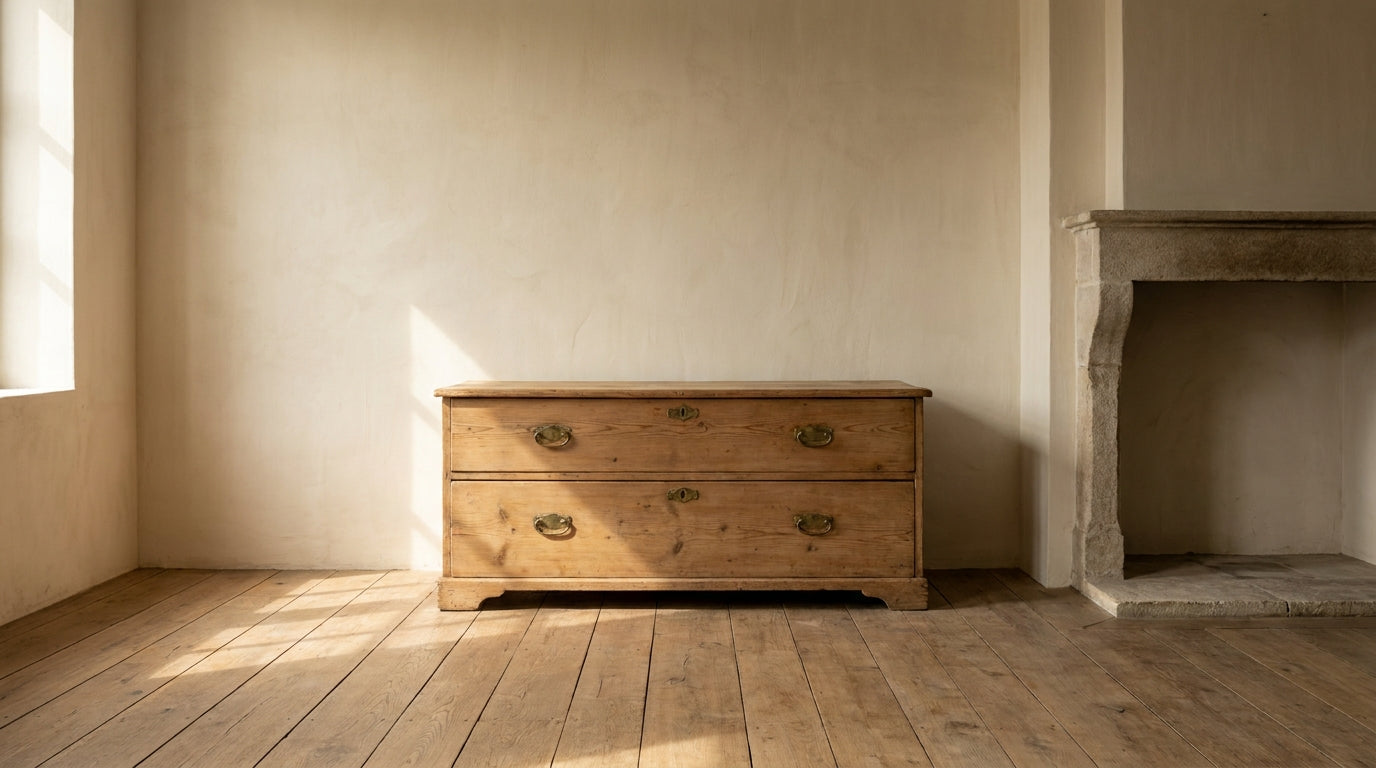
Reclaimed pine furniture is one of the most counterfeited categories on the internet right now. Most of what's labeled "reclaimed pine" on the big general-furniture marketplaces and import-driven retailers is new pine that has been wire-brushed, chemically distressed, or run through a beating machine to look old. Real reclaimed pine is structural lumber pulled out of a 19th- or early-20th-century building and remilled into furniture. The difference is visible in person and roughly $1,500 to $4,000 worth of materials and labor in your favor when you get a real one.
This guide is what our team walks customers through when they call us before they buy. Sourcing reclaimed pine is what we do for a living, so we'll be specific about what to look for, what to ask, and what fair pricing looks like for the piece you're considering.
Reclaimed Pine vs. New Pine With a Distressed Finish: How to Tell Them Apart
Four physical tests separate genuine reclaimed pine from factory-distressed new pine. You can run all four in under sixty seconds standing in front of the piece.

Nail holes. Real reclaimed pine has square nail holes (pre-1890 cut nails) or round holes with a dark oxidation ring around them where iron leached into the wood for decades. New pine "distressed" pieces have holes drilled with a power drill, which leaves a clean conical bore and zero oxidation. Run a fingernail across the hole. If it catches on a sharp lip, it's new. If it slides over a softened, slightly stained rim, it's old.
Grain density. Old-growth pine grew slowly. Count the growth rings across one square inch on the end grain or on a sawn edge. Genuine reclaimed pine usually shows 20 or more rings per inch. New farmed pine is typically 4 to 8 rings per inch because it was harvested at 20 to 30 years old. This is the single hardest fake to manufacture and the most reliable tell.
Patina depth. Old pine darkens unevenly because oxidation moves into the surface a millimeter at a time across decades. New pine that's been stained to look old will show uniform color when you sand a hidden corner. Reclaimed pine, even sanded, will show graduated tone fading from dark surface to lighter interior. If the piece has a removable drawer or a cleat you can shave a flake off, do it.
Board width. Old-growth lumber came from trees with 30-inch trunks. Single-board widths over 14 inches are common in reclaimed material and physically impossible to source from modern plantation pine. If you see a tabletop, chest top, or sideboard top made from boards 16 inches wide and up, with no glue joints, the wood is old. Period.
A piece like the serpentine pine chest is a useful reference point for what genuine old-growth pine looks like across all four tests at once. Stand a factory-distressed mass-market chest next to it and the difference reads from across the room.
Four checks that tell you the pine is actually old
| Check | Genuine reclaimed | What a fake looks like |
|---|---|---|
| Growth rings per inch | Tight, from slow-grown old timber | New farmed pine is 4 to 8, because it was harvested at 20 to 30 years old |
| Single-board width | Over 14 inches is common. 16 inches and up with no glue joints means the wood is old | Physically impossible to source from modern plantation pine |
| Weight of a dresser-proportioned chest | 90 to 140 pounds | If the seller says 50 pounds, the wood is not what they claim |
| Humidity it wants once home | 35 to 55 percent relative humidity | Below 30 percent brings hairline cracks at the breadboard ends |
Antique Pine Is a Separate Category
Antique pine furniture, pieces built before about 1900 from old-growth pine, is a separate market we do not sell. We build new pieces from old-growth reclaimed pine boards, which is a different category. If you want a true antique, you would shop estate sales and specialty antique dealers. If you want the patina, density, and grain of old-growth pine in a piece sized for a modern room and built with contemporary joinery that will not split, that is what our reclaimed pine collection is.
Why Reclaimed Pine Gets Sticky — and What That Tells You About the Wood
Heart pine (the dense center wood of old-growth pine trees) keeps producing resin for years after the tree comes down. If a reclaimed pine piece develops a sticky film on the surface, especially in a warm room or near a window, that resin is the culprit. The good news is that stickiness is proof the piece is genuine old-growth. New plantation pine has nowhere near the resin content to do this.

The right way to handle a resin-prone piece is to seal it with a shellac-based primer (Zinsser BIN is the standard) before any topcoat goes on. Shellac is the only finish that fully blocks pine resin. A maker who has done this properly will not have stickiness reappearing. A maker who used water-based primer or skipped sealer entirely will see resin bleed through within six months, and that's what you're feeling.
If a piece is sticky after a year or more in a home, the seller skipped the sealer. The fix is straightforward: a furniture refinisher will strip the existing topcoat and apply shellac primer before recoating. Budget $400 to $900 for a chest-sized piece.
The wax-sealed bowfront chest is finished with hard wax over a properly sealed surface, which is the finish we recommend for reclaimed pine in residential use. Wax breathes, which lets the wood acclimate to humidity changes. It also shows wear honestly rather than chipping like a hard lacquer would.
What to Ask the Seller Before You Buy Any Reclaimed Pine Piece
Six questions. If a seller can't answer at least four of them clearly, the piece is not what they're claiming. Our team gets asked these constantly and we keep written answers ready for every piece we sell.
-
Where did the wood come from? A real reclaimed-pine seller can name the building type and usually the region. "Heart pine flooring from an 1880s Georgia textile mill" is a real answer. "Reclaimed barnwood" with no specifics is a stock-photo answer.
-
Was the wood kiln-dried after reclamation? Pine pulled out of a barn has been air-drying for a century and is generally stable, but proper makers kiln-dry it again after milling to drop the moisture content to 6–8 percent before joinery. Skipping this step is how you get a chest that splits in winter.
-
What joinery does the piece use? Mortise-and-tenon and dovetailed drawers are correct for this price band. Pocket screws and dado joints are not. A maker who built mortise-and-tenon will say so without prompting.
-
What finish was applied, and was the wood sealed first? Shellac primer plus your choice of topcoat is the answer you want to hear. Polyurethane over raw pine is the answer that means stickiness in your future.
-
How heavy is the piece? Old-growth pine weighs more than modern pine because the rings are tighter. A genuine reclaimed pine chest of dresser proportions will be 90 to 140 pounds. If the seller says 50 pounds, the wood is not what they claim.
-
Can you see a photo of the underside or a drawer interior? The hidden surfaces tell the truth. Real reclaimed pine shows the same patina depth and grain density on the underside as on the top. Factory-distressed new pine shows bright orange wood under the drawer slides.
The reclaimed pine console is one we built specifically as a documented piece. Every one of those six questions has an answer in writing, and we send the documentation with the proof of purchase.
How Reclaimed Pine Holds Up in Real Rooms: Humidity, Dents, and Finish Wear
Old-growth pine sits about halfway between modern softwoods and the harder hardwoods in terms of durability. On the Janka hardness scale, antique heart pine clocks in around 1,225 pound-force. Modern plantation pine is around 690. Oak runs 1,290. Walnut is 1,010. So reclaimed pine is roughly as dent-resistant as red oak and noticeably harder than what new pine furniture would give you.
In real use, that means:
- Heeled shoes will leave marks on a reclaimed pine floor if dropped from waist height. They will not leave marks on a tabletop unless you actually impact the surface.
- Glassware bases will not ring the wood the way they will on softer pine.
- Dog claws across a top are a problem. Wax finish forgives it. Lacquer does not.
Humidity is the bigger concern. Reclaimed pine wants 35 to 55 percent relative humidity. Below 30 percent for sustained periods, the wood can develop hairline cracks at the breadboard ends or along the longest unsupported board on a tabletop. Above 65 percent, drawer slides start to swell and stick. If a home sits in a region with seasonal humidity swings of more than 30 percentage points, a humidifier in winter or a dehumidifier in summer is necessary equipment. Our customers in Phoenix and Buffalo both run humidity control at different times of year, and their pieces hold up fine.
The storage pieces in our catalog are sized and joined specifically with breadboard ends and floating-panel construction to handle these humidity swings without splitting.
Where to Buy Reclaimed Pine Furniture, and What "Near Me" Usually Gets You
If you search "reclaimed pine furniture near me" the first three pages of results will be paid placements from large general furniture importers. Those sellers aren't lying when they say "reclaimed look" but most of them aren't selling the actual material.
The honest path is to buy from a brand that names where the wood came from. Our reclaimed pine collection lists the source building on every piece, and the phone number on every product page reaches our team directly.
Avoid anything that says "reclaimed style" without saying where the wood came from. The word "style" is the seller telling you the wood is new.
For shoppers at the $1,400 to $4,000 price band who want a piece with documented provenance, the reclaimed pine collection is what our team sources and curates. We name the building of origin on every piece, and the number on every product page reaches our team directly.
Common Questions
How can you tell if reclaimed pine furniture is actually old-growth wood? Count the growth rings on the end grain. Genuine old-growth pine shows 20+ rings per inch. Modern farmed pine shows 4 to 8. This single test is the hardest one to fake and the most reliable.
Why does a reclaimed pine table get sticky after sanding? Sanding releases resin trapped under the previous finish. Heart pine carries resin for decades after milling. The fix is to seal the surface with a shellac-based primer (Zinsser BIN) and then recoat with whatever topcoat is preferred. Polyurethane alone will not stop resin bleed.
Is antique pine furniture more durable than reclaimed barn wood? The wood itself is the same density. The difference is in the joinery. A 130-year-old antique piece may have dried joints that have shifted. A reclaimed-pine piece built with modern mortise-and-tenon joinery is often more structurally stable than an antique of the same form. Antique pieces win on originality and provenance. Reclaimed pieces win on structural reliability and scale.
What finish should be used on reclaimed heart pine? Shellac primer first, then either hard wax (best for residential) or oil-based polyurethane (better for high-use tabletops). Skip water-based finishes on reclaimed pine.
Does reclaimed pine furniture warp in humid climates? Not if the wood was kiln-dried to 6–8 percent moisture before construction and the piece uses floating-panel or breadboard-end construction. Both of those should be verifiable before any purchase.
What questions should a buyer ask before buying a reclaimed pine chest or table? The six questions in the section above. Where the wood came from. Whether it was kiln-dried. What joinery was used. What finish was applied. The piece weight. Plus a photo of the underside or a drawer interior. A real reclaimed-pine seller can answer all six in writing.
If you want to talk through a specific piece before committing, the number on every product page reaches our team directly.


