
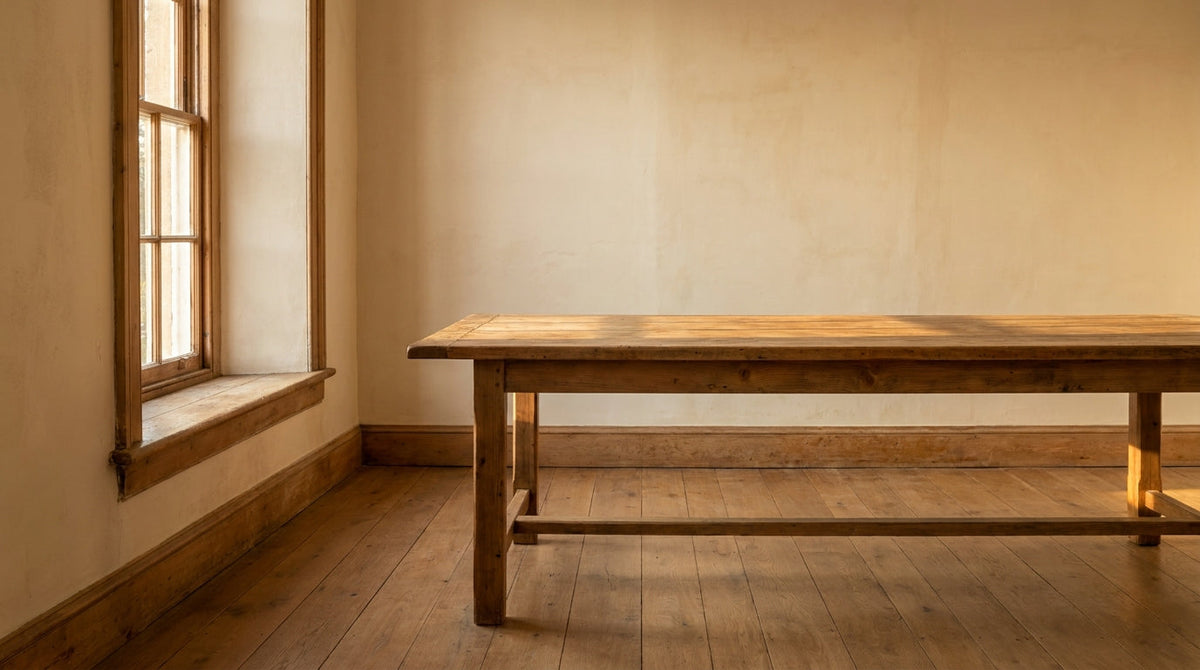
A wax-finished top needs paste wax twice a year and nothing else. No spray polish, no oil soap, no polyurethane over the top. Wipe spills the same day, blot rather than rub, and re-wax when water stops beading on the surface. Ten minutes a season keeps it out of a refinisher's shop.
The French Country Dining Table Antique Grey is built from reclaimed pine and finished with paste wax, not polyurethane. That choice is the whole reason the top looks the way it does (soft sheen, deepened grain, no plastic glare), and it's also the reason you'll spend ten minutes a season on it instead of paying a refinisher every five years to strip a chipped poly coat. This guide is how we'd walk you through caring for it at the counter.
Why We Wax Reclaimed Pine Instead of Sealing It With Polyurethane
Polyurethane forms a hard film on top of the wood. It looks fine for the first two years, then it starts to chip at the corners where chairs hit, yellow in the spots that get sun, and lift in flakes if water sits on it. Once that film fails, there is no spot fix. The only repair is to sand the whole top down to bare wood and start over.
Wax does the opposite. It penetrates the surface layer of the pine, sits in the grain, and stays repairable. A heat ring, a scratch from a plate, a dull patch where someone wiped with the wrong cloth: all of those are fifteen-minute fixes on a waxed top. You rub the damaged area back with fine wire wool, work a small amount of paste wax in, buff it out, and the repair blends because wax is a finish you can keep adding to.
The trade-off is honest: wax does not waterproof the wood the way poly does. If you leave a wet glass on the reclaimed pine dining table for forty-five minutes, you'll get a ring. Wipe it up in five and you won't. That trade is the deal, and reclaimed pine that already lived fifty or eighty years in a building is the right wood for it, because the wood has already moved as much as it's going to move and the wax is finishing wood that's done settling.
The whole care routine
| Task | How often | Use | Never use |
|---|---|---|---|
| Dust | Weekly | Dry cotton cloth | Spray polish |
| Spills | Same day | Blot, then dry | Rubbing, or water left to sit |
| Re-wax | Twice a year | Paste wax | Oil soap |
| Check whether it is due | When water stops beading | A single drop of water | Polyurethane over the top |
What a Wax Finish Actually Does to the Wood (and What It Cannot Do)
Wax feeds the surface fibres of the pine, slows down moisture absorption, and deepens the colour by a half-shade without adding any gloss. On reclaimed pine specifically, that's why the saw marks and nail holes from the original milling stay visible. The wax sits in the surface, not over it, so the texture comes through.
What wax does not do: it does not harden the wood against sharp impacts (a dropped knife will still mark it), it does not stop standing water from raising the grain if it sits long enough, and it does not block sun from slowly lightening the tone over years. None of those are flaws. They're the cost of a finish you can maintain yourself with a cloth and a tin of wax instead of a contractor and a sander.
The Weekly and Monthly Maintenance Routine for Wax-Finished Reclaimed Pine
Daily: dry cotton cloth or microfibre. That's it. Push crumbs off, wipe dust off, done.
When you need to clean something off, sauce, a coffee splash, a sticky fingerprint, use a barely damp cloth, wipe it, then immediately dry the spot with a second dry cloth. Never leave the surface wet. No sprays, no household cleaners, no all-purpose wipes. The cleaning agents in those products will cut through wax the same way they cut through grease, because that is literally what they're designed to do.
Monthly, run your hand across the top. If it feels smooth and slightly slick, the wax is doing its job. If it feels dry or grippy, it's time to refresh.
Seasonal wax refresh (roughly twice a year for a dining table, once a year for a chest or console): apply a thin coat of paste wax — Howard Feed-N-Wax, Briwax clear, or any neutral paste wax with no silicone and no stain — using a cotton cloth, working in the direction of the grain. Let it haze for fifteen to twenty minutes. Buff it out with a clean cotton cloth until the surface feels smooth, not tacky. A piece from the reclaimed pine range needs nothing more involved than that.
When and How to Re-Wax: The Signs That Tell You It's Time
A re-wax is overdue when water no longer beads on the surface and soaks in flat, when the top looks dull or powdery in patches around the most-used spots, or when the wood feels dry or rough under your hand instead of slick. Any one of those means you're due. All three means you're a season late.

Prep is light. Wipe the surface clean with a barely damp cloth and let it fully dry. An hour is plenty. If there are dull patches with stuck-on residue, go over them gently with 0000-grade wire wool, following the grain, until the surface is uniform. Don't press hard; you're not sanding, you're cleaning.
Apply paste wax with a cotton cloth in thin coats, working a square foot at a time and always following the grain. Let it haze. Buff with a fresh cloth. If you want a slightly deeper sheen, a second coat the next day, buffed harder, will get you there. For a full dining table the whole job takes about thirty minutes, and you can use the table the same evening. The same routine works across the dining table collection: same finish, same cadence.
What Damages a Wax Finish and How to Avoid It
Four things will degrade or strip a wax finish, in roughly this order of damage:
Silicone-based furniture sprays (Pledge, most "quick-shine" sprays). Silicone builds up on top of wax, attracts dust, and contaminates the surface in a way that makes future re-waxing patchy. If you've used one of these, stop. The surface can be cleaned back with mineral spirits and re-waxed, but it's a job.
Solvent cleaners (anything with ammonia, bleach, or "degreaser" on the label). These dissolve wax on contact. Use plain water on a damp cloth, dried immediately. That's the only cleaner the surface needs.
Rubber-backed mats and placemats. The rubber reacts with wax over months and leaves a permanent dull imprint. Use felt, cork, cotton, or linen instead. A piece like the parquet-top baluster table has a top worth protecting on this front: the parquet pattern will show a rubber-mat outline forever if one sits there for a year.
Prolonged pooled water. A wet glass left for an hour will mark. A spill left overnight will raise the grain. Coasters on a wax-finished table aren't optional. They're the difference between a forty-year top and a five-year repair.
How to Spot-Repair a Wax-Finished Surface After a Ring, Scratch, or Heat Mark
Most surface damage is a fifteen-minute fix. You need 0000-grade steel wool, a tin of paste wax, and a couple of cotton cloths.

For a water ring or heat mark (the white cloudy spots): rub the affected area gently with 0000 wire wool, following the grain, until the mark lifts. Work in light passes. You're abrading the damaged wax, not the wood. Wipe the dust off with a dry cloth. Apply a small amount of paste wax to the spot with a cloth, let it haze for ten minutes, then buff. The repair will blend within a few days as the wax settles.
For a light scratch: same process. The wire wool softens the scratch's edges, the wax fills it, and the buffed surface evens out the colour. Deeper scratches that have cut through to bare wood will still be visible, but on reclaimed pine, that's character, not damage. The piece already has nail holes and saw marks from its first life, and a new mark settles in alongside them within a season.
For something heavier, a deep gouge or a stain that's gone through the wax into the wood, call us. Pieces like the reclaimed pine console can be touched up at home in almost every case, but the rare repair that needs a refinisher we'd rather steer you through than have you guess at. (336) 431-9929.
Common questions
Can you use furniture polish or spray wax on a wax-finished reclaimed pine table?
No. Most furniture sprays, Pledge and similar, contain silicone, which builds up on top of paste wax, attracts dust, and contaminates the surface so future re-waxing goes on patchy. Spray waxes are a different category of product designed for sealed or lacquered furniture, not for surfaces finished with paste wax. Use a dry cotton cloth for daily cleaning and a tin of neutral paste wax twice a year. That's the whole product list.
How do you keep reclaimed pine looking as natural as possible without stripping its character?
Use a neutral, uncoloured paste wax (Howard Feed-N-Wax or Briwax clear), apply it thin, and buff it well. Avoid tinted or "antiquing" waxes unless you're actively trying to deepen the colour. They will pool darker in the saw marks and nail holes, which can either look great or look like a mistake depending on the piece. When in doubt, neutral wax keeps the wood looking like the wood.
How often should you re-wax reclaimed pine furniture?
A dining table that gets daily use: twice a year, roughly at the start of summer and the start of winter. A chest, console, or sideboard that gets light use: once a year is fine. The honest test is the water-bead test. Drip a few drops of water on the top, wait thirty seconds. If they bead, you're good. If they soak in flat, it's time.
What wax should you use on reclaimed pine — paste wax, liquid wax, or beeswax?
Paste wax. Liquid waxes don't build the same protective layer and need re-application too often. Pure beeswax is too soft on its own and stays slightly tacky. A blended paste wax, usually beeswax plus carnauba in a mineral-spirit base, is the right product. Howard, Briwax, Liberon, or any reputable hardware-store brand works. Confirm it's silicone-free on the label.
Can a wax finish on reclaimed pine handle daily use as a dining table?
Yes, with coasters and a habit of wiping spills quickly. We sell these as dining tables because that's what they are: built to be used every day. The wax finish asks for ten minutes of attention twice a year and forgives almost everything else, but it does not forgive a wet glass sitting on it for an hour. Use coasters under wet drinks and trivets under hot dishes, and the top will outlast the rest of your dining room.
What happens if you accidentally use a silicone-based cleaner on a wax-finished surface?
One use won't ruin the piece, but the silicone needs to come off before you re-wax. Wipe the surface down with mineral spirits on a cotton cloth, working in small sections, then let the wood dry for a few hours. Once it's clean and dry, apply a fresh coat of paste wax and buff it out as usual. If the contamination has been ongoing, months of weekly spray, call us and we'll talk through whether the top needs a more thorough cleanback before re-waxing.


